
Common Mistakes When Setting Up a Company in Singapore (and How to Avoid Them)
Setting up a company in Singapore remains one of the most efficient ways to enter the Asian market. The incorporation process is fast, the tax environment is competitive and the legal system is transparent. However, many founders underestimate the compliance requirements. The assumption that Singapore’s efficiency means minimal ongoing effort, can often lead to costly mistakes.
This article outlines the most common errors businesses make when setting up a company in Singapore, with clear steps to avoid them. It also links to deeper resources covering each topic in more detail.
1. Mistaking Speed for Simplicity
Registering a company in Singapore may only take a few hours, but that speed does not reduce the complexity of staying compliant. Incorporation is just the first step, ongoing compliance and operational setup follow. There are filing obligations, accounting setup, tax registration and statutory appointments, which all have strict deadlines.
Many new businesses miss key filings in their first year. They assume that compliance will be handled automatically or at year-end. In reality, the first 90 days after setting up a company in Singapore are critical. Missing filings like the Estimated Chargeable Income (ECI) can result in financial penalties.
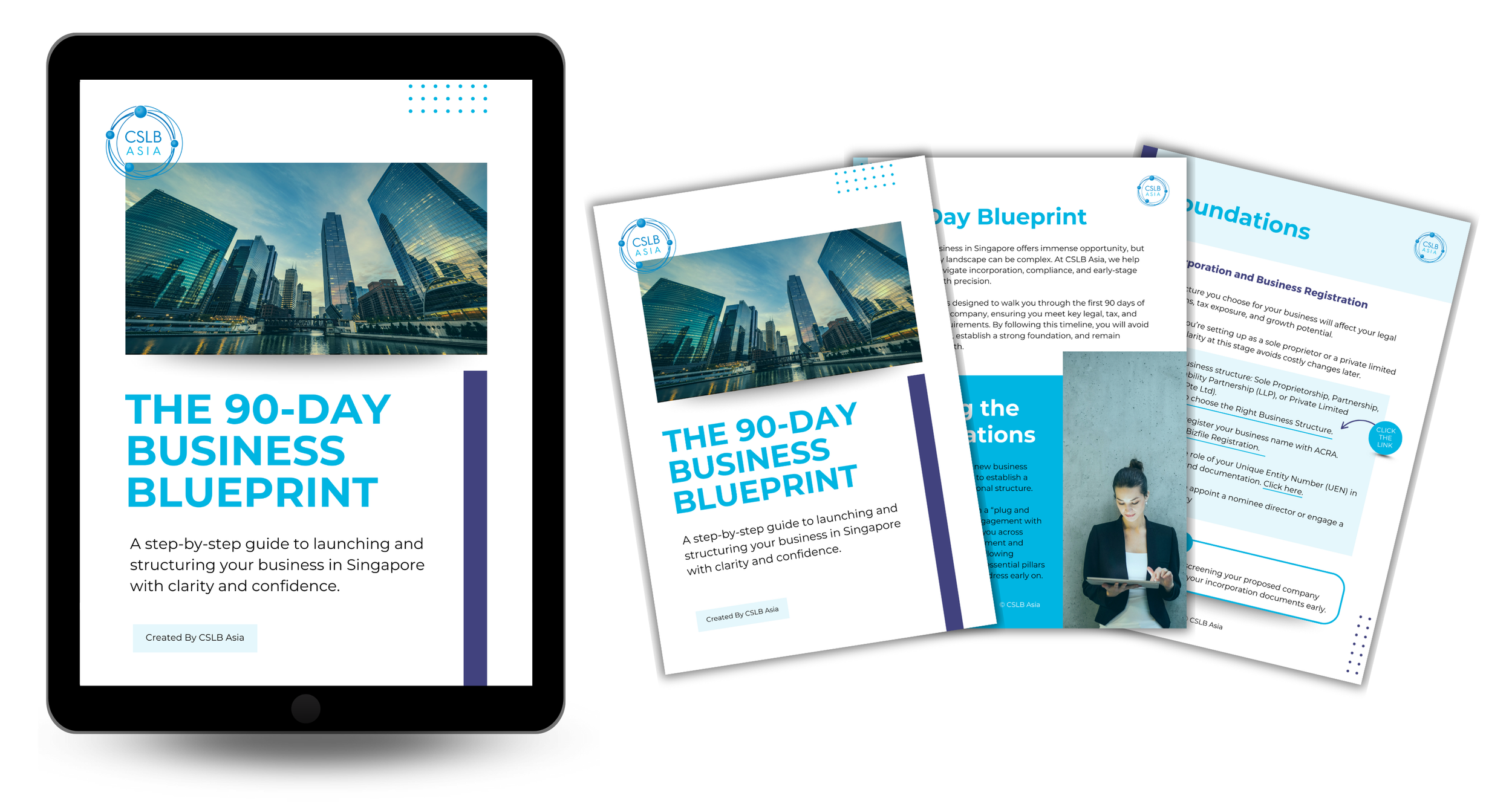
For a clear roadmap through your first compliance steps, download our 90-Day Business Blueprint.
2. Misunderstanding the Role of a Nominee Director in Singapore
Every company must appoint at least one director who is a resident in Singapore. This individual is not a placeholder. The nominee Director in Singapore carries full legal responsibility for ensuring the company meets its statutory obligations.
Some foreign owners appoint a nominee to meet this requirement but fail to give them the information or tools to carry out their duties. This creates a legal risk. The nominee Director in Singapore is accountable for tax submissions, maintaining company records and ensuring compliance with the Companies Act.
If you are considering appointing a nominee Director in Singapore, it is essential to:
Define the nominee director role clearly
Document the scope of their responsibilities
Ensure they have full access to the company’s records and filings, including access to the company bank account (read only access at a minimum)
Failure to do the above can lead to compliance breaches, placing both the nominee director and the business at risk of fines, legal consequences or reputational damage.
CSLB Asia provides qualified local director services and advisory support to help businesses meet these requirements with confidence. If you need guidance on appointing a nominee Director in Singapore or ensuring your structure is compliant, get in touch with our team.
3. ECI Filing Is Not Optional
One of the most common tax-related mistakes after setting up a company in Singapore is misunderstanding the need for ECI filing. All companies are required to file an Estimated Chargeable Income with IRAS within three months after the financial year-end, unless they qualify for specific exemptions. More on ECI and exemptions here.
Many businesses assume that because they are using accounting software, this step will be handled automatically. It will not.ECI filing must be done manually through the IRAS portal. The Director or an authorised agent will need to log in to the official IRAS myTax Portal to submit your company’s ECI electronically. If the company is profitable or expects to generate income, this filing is mandatory, even if final accounts are not yet complete.
To understand how this fits into your tax timeline, read our detailed guide to ECI filing in Singapore.
4. Assuming Tax Filing Happens Automatically
There is a common misconception that the profit and loss statement generated by accounting software is all that is needed for tax filing. Platforms like Xero and QuickBooks are valuable tools that simplify day-to-day operations, help maintain accurate records and produce financial reports. However, they are not connected to IRAS and can not complete the actual filing process.
Singapore companies are required to submit their Estimated Chargeable Income (ECI), followed by either Form C or Form C-S. These documents must reflect tax adjustments, deductibles and exemptions in line with IRAS guidelines. The figures on a P&L may differ from what is legally required for Singapore tax filing.
Businesses that rely solely on system-generated reports, without preparing compliant tax schedules, often submit inaccurate or incomplete information. Errors here can lead to penalties or trigger an audit.
Singapore tax filing must be managed as a distinct compliance process. Keeping your financial records accurate throughout the year is essential, but so is understanding how those records translate into tax filings. If you're unclear on what IRAS expects, our guide on why accurate financial statements matter explains the key differences. And we also have a complete guide to corporate tax in Singapore here.
5. Getting Payroll Wrong
Payroll is another area that causes confusion. Many foreign businesses assume they can use the same payroll systems they use elsewhere. This is not the case. Payroll in Singapore includes unique compliance requirements, including CPF contributions, IRAS reporting and submission of employee forms such as IR8A and IR21.
Incorrect CPF calculations, missing IR8A forms or late submissions can all lead to penalties. IRAS and CPF Board expect employers to meet local standards from the first month of operations.
In addition to CPF, employers must also contribute to the Skills Development Levy (SDL) for all employees, including foreign staff. This levy is calculated separately from CPF and is payable to the SkillsFuture Singapore Agency. It is required even if the employee is not subject to CPF (such a foreign workers).
The SDL is typically calculated at 0.25% of the employee’s monthly remuneration, subject to a minimum of SGD 2 and a maximum of SGD 11.25 per employee per month. Employers are responsible for calculating and submitting this amount monthly, together with CPF payments. Many new businesses overlook this obligation or assume it is covered by their payroll provider, which can lead to underpayment and non-compliance. Failure to pay SDL on time may result in late payment penalties and enforcement action by the SkillsFuture Singapore Agency, similar to CPF non-compliance.
Companies must use payroll software or services that are compatible with Singapore tax filing and statutory reporting. For a breakdown of what’s involved in managing payroll in Singapore, see our full payroll compliance guide.
Need Support with Setting Up a Company in Singapore?
At CSLB Asia, we support clients with end-to-end payroll compliance, ECI preparation and corporate tax filing. If you need assistance managing these obligations or ensuring your filings meet IRAS standards, contact us for tailored support.
If you are in your first months of business or about to begin setting up a company in Singapore, the best step you can take is to start with a clear compliance checklist. Our 90-day plan walks you through every task required after incorporation, from appointing the company secretary to registering for taxes and setting up payroll.
Laying the Right Foundation When Setting Up a Company in Singapore
Singapore offers one of the most attractive business environments in the world, but it rewards those who are prepared. Each phase after incorporation requires attention to detail, especially around tax, director responsibilities and payroll setup.
If your business is in the process of setting up a company in Singapore, ensure you have the right systems and partners in place. Meet your ECI deadlines, understand the scope of a nominee director’s duties, and ensure your Singapore tax filing and payroll in Singapore meet all regulatory standards. These steps will help you establish a stable, compliant foundation for long-term growth.
At CSLB Asia, we can be as involved as you need us to be. Some clients ask us to manage end-to-end compliance and act as their nominee Director in Singapore. Others come to us for targeted support with tax filings, payroll setup or regulatory guidance. We work flexibly to match your stage of growth and the structure of your business.
If you need advice or support at any point in your setup or compliance process, don’t hesitate to get in touch.